


Brass Angle Valve
What is Brass Angle Valve
It belongs to the manual valves category and is frequently used to stop or regulate the flow of a water through a pipe, which is why it is also sometimes referred to as a stop valve. The intake and outflow ports of an angle valve are parallel to one another. However, angles are typically employed in business and domestic plumbing as regulating tools.
Benefits of Brass Angle Valve
Durability
Brass is known for its durability and resistance to corrosion, making it an excellent material for plumbing fixtures. Brass angle valve can withstand high pressure and temperature, making it a reliable choice for controlling water flow.
Easy installation
Brass angle valve is easy to install and does not require special tools or skills. It can be installed in a matter of minutes, making it a convenient option for both professionals and DIY enthusiasts.
Versatility
Brass angle valve is suitable for a wide range of applications, including sinks, toilets, showers, and water heaters. It can be used in residential and commercial buildings, making it a versatile and practical fixture.
Tight Seal
Brass angle valve provides a tight and secure seal, preventing leaks and ensuring proper water flow. It has a sturdy handle that allows for easy control of the water flow, making it a reliable and user-friendly option.
Cost-effective
Brass angle valves is an affordable plumbing fixture that provides great value for the money. It is durable and long-lasting, meaning that it will save you money in the long run by reducing the need for repairs and replacements.


Why Choose Us
Customer Service
We firmly believe that we offer THE BEST customer support in the industry and it is our ongoing goal to continually improve on our services. As an independently owned and operated business, we are able to provide the most accommodating service possible.
Advanced Equipment
We take great measures to ensure that we work with the industry’s highest quality equipment and that our equipment is regularly and meticulously maintained.
Competitive Prices
We offer our products at competitive prices, making them affordable for our customers. We believe that high-quality products should not come at a premium, and we strive to make our products accessible to all.
Efficient And Convenient
The company has established marketing networks around the world to provide high-quality services to customers in an efficient and convenient manner.
High Quality Products
We always put customer needs and expectations in the first place, refine on, continuous improvement, to seek every opportunity to do better, to provide customers with their expectations of quality products, to provide customers with the most satisfactory service at anytime.
Professional Team
We have a team of skilled and experienced professionals who are well-versed in the latest technology and industry standards. Our team is dedicated to ensuring that our customers get the best service and support possible.
Decide Where to Install the Brass Angle Valve
Before you can install a brass angle valve, you need to know where it's going to go. Typically, brass angle valves are installed in the bathroom or kitchen, where they can be used to shut off the water supply to a sink, toilet, or other fixture. You'll need to determine where you need to install the valve so that you can plan the rest of the installation process.
Turn off the Water Supply
Before you start working with the plumbing, turn off the water supply to the area where you'll be installing the brass angle valve. This will help prevent leaks and other problems. You can turn off the water supply by closing the main shutoff valve, which is typically located near your water meter.
Prepare the Pipes
Next, you'll need to prepare the pipes where you'll be installing the brass angle valve. Use a pipe cutter to cut the pipe to the necessary length. Then, use a deburring tool to remove any rough edges from the cut ends of the pipes. This will help ensure a tight seal when you connect the valve to the pipes.
Install the Brass Angle Valve
Now it's time to install the brass angle valve itself. To do this, you'll need to screw the valve onto the pipes where you made the cuts. Make sure that you use the appropriate fittings to connect the valve to the pipes, and be sure to tighten everything securely to prevent leaks.
Turn the Water Supply Back On and Test the Valve
After you've installed the brass angle stop valve, turn the water supply back on and test the valve to make sure that it works properly. Check for leaks around the valve or any other areas of the plumbing, and make any necessary adjustments. Once you've confirmed that everything is working properly, you're ready to use your new brass angle valve.
Components of Angle Valve
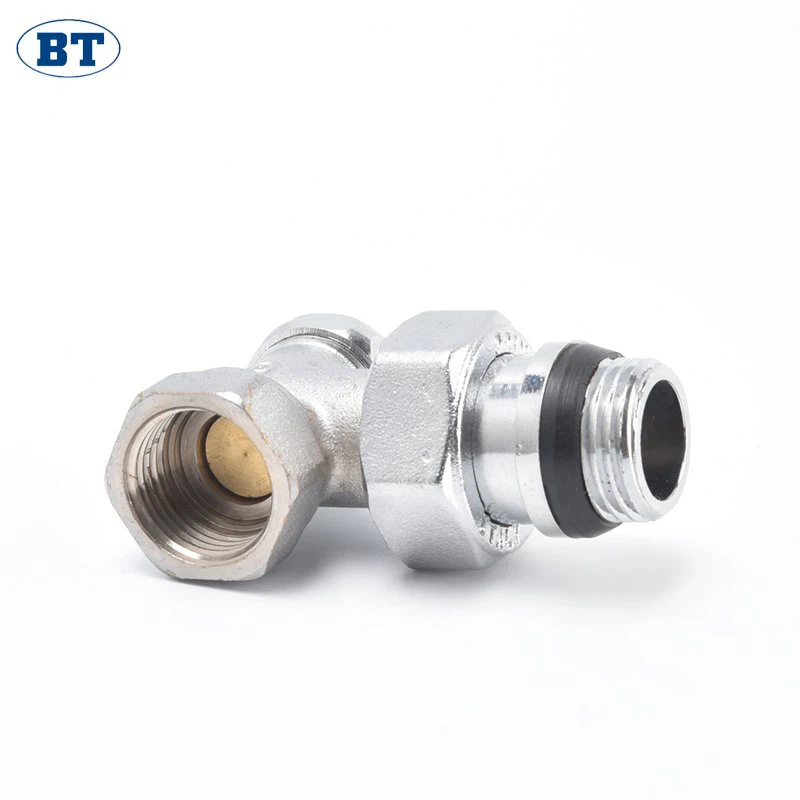
Angle valve is a common pipeline valve, and its main components include valve body, valve, handle and sealing ring.
Valve body
The valve body is the main load-bearing part of the angle valve, usually made of cast iron, steel, stainless steel and other materials, with the characteristics of corrosion resistance and high strength. The valve body is usually L-shaped or T-shaped, with the smaller end used to connect the pipeline and the larger end used to install the valve and handle.

Valve
The valve is a key component of the angle valve, used to control the flow of fluid in the pipeline. The valve is usually composed of a ball or disc type, with the characteristics of preventing water leakage and wear resistance.

Handle
The handle is the operating part of the angle valve, usually made of plastic or metal. The handle is connected to the valve through a handle rod to control the opening and closing of the valve.

Sealing ring
The sealing ring is the main sealing component of the angle valve, located between the valve and the valve body, to prevent water leakage and penetration. The sealing ring is usually made of rubber or plastic.
What Are the Different Types of Angle Valves
Compression Angle Valves
Compression angle valves create a tight seal against the pipe or tubing that they are connected to. The rubber gasket, also known as a compression ring or ferrule, is a crucial component in achieving this seal. The tight seal makes them suitable for high-pressure sections of plumbing systems and is sometimes used for gas line connections.
Multi-Turn Angle Valves
These are utilized for regulating the flow of water within piping systems, and are commonly found in HVAC systems and water treatment plants. They feature a wheel used to open and close the valve.
Angle Ball Valve
Features a quarter-turn operation with a lever handle. It regulates water flow in residential plumbing.
Angle Stop Check Valves
An angle stop check valve is a plumbing valve with an "L' ' shape, combining the functions of an angle stop valve and a check valve. It is typically installed in tight spaces and features a check valve mechanism preventing backflow. This valve type is used in residential plumbing, particularly behind bathroom and kitchen fixtures.
2-in-1 Angle Valve
Allows you to turn on two sources of water using one valve.
3-Way Angle Valve
Used to control water flow in three different directions It is often found in garden hose connections and situations where two water lines meet, such as in a kitchen sink.
What Is the Maintenance of Brass Angle Valves
The maintenance of angle valves requires periodically inspecting them to check for any visible signs of wear, corrosion, or leaks. Test the valve by opening and closing it to ensure that it operates smoothly. If the valve is difficult to turn or if it does not fully shut off the water flow, it may require maintenance. Keep the valve clean to prevent debris or mineral buildup. Check the valve' s connections for any loose nuts or fittings. Use a wrench or pliers to tighten them as needed. Over time, the O-ring or sealing components may wear out. If you notice leaks around the valve stem, it' s advisable to replace the O-ring or the damaged component. Applying a small amount of lubricant to the stem and moving parts can help maintain smooth operation. Be cautious not to use too much lubricant, as excess lubrication can attract dirt and debris. If you notice water dripping from the valve, it' s important to investigate and address the issue. In some cases, you may need to replace the valve if the leak cannot be resolved through maintenance. Refer to the manufacturer' s maintenance guidelines specific to your angle valve. Different types of angle valves may have unique maintenance requirements.
How to Inspect a Brass Angle Valve
Before you begin replacing your Brass Angle Valve, it is important to thoroughly inspect its components. Inspecting each part individually can save you time and money. The following are some things you should check in order to ensure the valve is in good shape: o The stem threads: ensure that they are clean and free of rust or corrosion.
The material
Copper is the best material for angle valves. It provides better service and lasts longer. It is much better than zinc alloy, which ages quickly and does not provide a great deal of service. Also, PVC and plastic do not look as good as metal alloys. If you have the budget, you should consider purchasing a Brass Angle Valve from a reputable supplier.
Function
This type of valve is designed to reduce pressure and regulate flow. They are useful in any application where you need to regulate pressure and temperature. They also have different mechanisms, depending on their function. They can be shutoff valves, needle valves, check valves, and stop-check valves.
Installation
Angle valves are easy to install and use. They come with easy directions. Some manufacturers include handles that require you to turn the handle a quarter turn to shut off water flow. This makes them more convenient when a sudden emergency arises. Another benefit to angle valves is that they are often connected to a faucet or toilet, allowing you to easily repair a faucet without shutting off the water.
Durability
A Brass Angle Valve is durable and can last for 10 to 25 years. It is less expensive than stainless steel and plastic angle valves. However, you need to maintain it properly, because it is prone to tarnish and requires some maintenance. Compared to plastic and lead-free valves, a Brass Angle Valve is also less prone to corrosion and can withstand higher pressures.
Where Are Angle Valves Used
Sink Outlet
The application of angle valves on sink outlets is mainly to control the supply of hot and cold water. Usually, two angle valves are required on the sink, one for cold water and the other for hot water. If a water purifier is also installed on the sink, an additional single cold angle valve is usually required for the water purifier. This design ensures that both the sink and the water purifier can get proper water supply, and it can also be easily repaired and replaced.
Water Heater Outlet
The water heater outlet requires 1 cold and 1 hot angle valve. This configuration ensures that the water heater can supply cold and hot water at the same time to meet the different needs of users. The hot and cold angle valves are usually distinguished by blue and red signs, which makes it easy for users to identify which is hot water and which is cold water. In addition, some angle valves are also equipped with check devices, which can effectively prevent water source pollution.
Switch
The angle valve is mainly used as a switch. When the faucet leaks, the user can directly close the angle valve without closing the main valve in the home. This design makes local water flow control more convenient and avoids the situation where other water-using equipment in the home is affected by closing the main valve.
Balcony Washing Machine Outlet
The angle valve plays a key role in the water outlet of the balcony washing machine. Usually, the balcony is equipped with 2-3 angle valves, especially when there is a sink or washing machine on the balcony. If hot water is supplied, you may need to install hot and cold water valves, but you can also choose to install only cold water valves. Angle valve, also known as angle stop valve or triangular valve, is an important plumbing accessory. It connects the water outlet to the hose and has a switch function, so that the amount of water can be controlled. The specific number of angle valves should be determined according to the room type and decoration requirements.
On The Heating Pipe
The angle valve plays a key role in the heating pipe. It is usually embedded in the wall as the interface point between the hose connecting the faucet and the wall. For example, in the bathroom, the faucet is usually equipped with a hot and cold water alternation function. At this time, two hoses will be pulled out from under the faucet and connected to the angle valve on the wall. This design not only facilitates the layout of the water pipes, but also ensures the stability and safety of the water flow.
Our Factory
YUHUAN BOTE VALVE CO.,LTD. is one manufactory which specialized producing brass ball valve, bibcock, angle valve, gate valve, check valve, gas valve and other kinds of zinc valve and brass fittings etc. Our factory covers 4000 square meters and employs more than 100 workers.


Certifications
